
Elon Musk envisions space-based AI data centers
2025-11-21 13:42:00+08
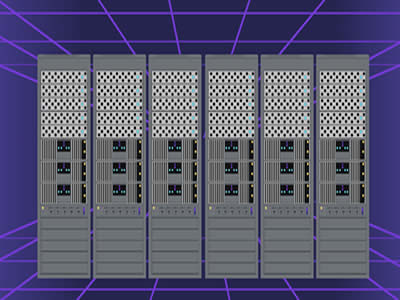
In a recent public speech, Tesla and SpaceX CEO Elon Musk predicted that within the next four to five years, AI computing in space could become the most cost-effective solution for meeting the explosive demand for computational power. He cited two key advantages of space: abundant “free” solar energy and efficient radiative cooling, which together could overcome limitations faced by terrestrial data centers.
Musk warned that as AI models grow ever larger, their energy and cooling requirements will soon outstrip Earth’s existing infrastructure. He estimated that future AI systems might need 200 to 300 gigawatts (GW) of continuous power—potentially approaching 1 terawatt (TW). To put that in perspective, a standard nuclear power plant generates about 1 GW, while the entire United States currently produces only 490 GW of continuous electricity. Building enough power capacity on Earth to support such demand, Musk argued, is simply not feasible—making space the logical next frontier.
However, Jensen Huang, CEO of NVIDIA, strongly disagrees. Calling Musk’s vision a “dream,” Huang emphasized the immense technical hurdles that make space-based AI data centers unrealistic in the near term—even in ideal orbits like geostationary.
According to Huang, a single megawatt-scale GPU cluster would require tens of thousands of square meters of cooling infrastructure, far beyond what any current spacecraft can accommodate. Launching such massive systems into orbit would demand thousands of rocket launches, each extremely costly—an undertaking he deems impractical within Musk’s proposed timeline.
Beyond scale, the space environment itself poses serious challenges. Today’s high-performance AI chips are not designed to withstand the intense radiation found in geostationary orbit. Making them space-ready would require heavy shielding or entirely new radiation-hardened architectures—both of which typically compromise performance.
Moreover, critical supporting technologies remain immature:High-bandwidth, low-latency communication with Earth.Autonomous operation and maintenance.Space debris detection and avoidance.Robotic servicing in orbit
All are still in early stages of development and far from ready for large-scale deployment.
While Musk sees space as an inevitable solution to AI’s energy crisis, Huang insists that for now, the focus should remain on optimizing Earth-based infrastructure—through advances in chip efficiency, liquid cooling, and renewable energy integration—before looking to the stars.